Shop for garden furniture and you’ll see the words rattan and wicker used almost interchangeably. One listing says “wicker sofa”, the next says “rattan corner set”, and they look identical. So is there actually a difference, and does it matter when you’re spending serious money on something that has to live outdoors?
The short answer is yes, there’s a difference, but it’s not the one most people expect. Once you understand how rattan and wicker furniture is made and named, it gets much easier to read a product listing and know exactly what you’re buying.
Is rattan the same as wicker?
Not quite. Rattan is a material. It’s a climbing palm that grows in the tropical forests of Southeast Asia, with long, solid, flexible stems. Wicker is a technique. It’s the method of weaving pliable strands into furniture, baskets and other shapes.
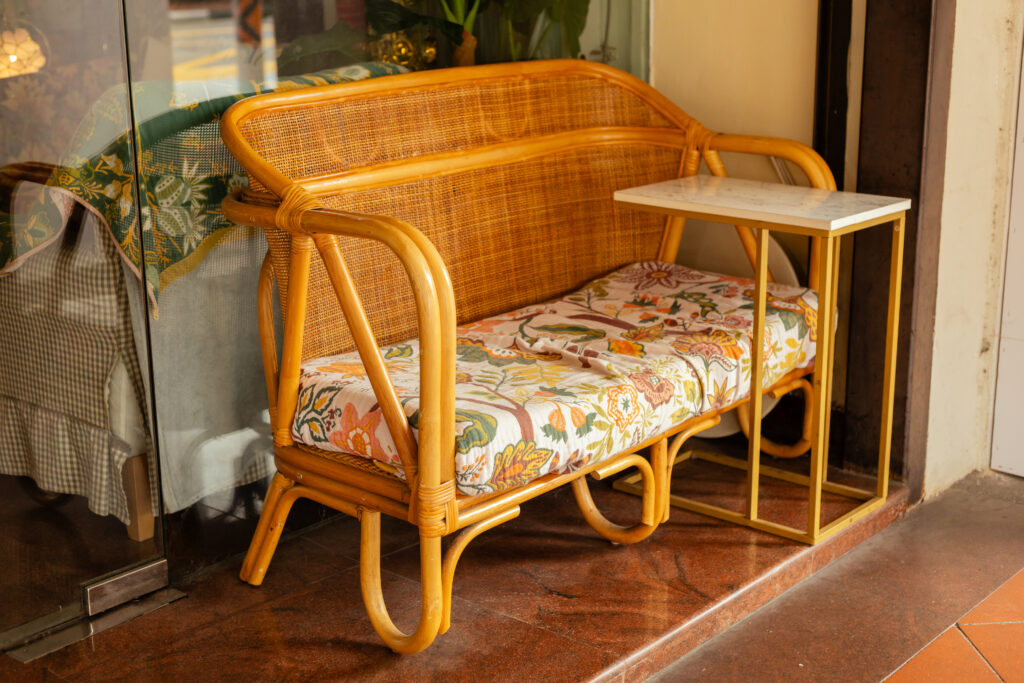
So wicker can be made from rattan, but it can also be made from willow, bamboo, reed, seagrass, paper cord or plastic. And rattan can be woven into wicker, or used whole as a solid frame. A traditional cane armchair is often both: a rattan frame wrapped and woven with strips of rattan cane.
That’s the dictionary answer. In everyday UK shopping, though, both words have drifted to mean “woven-look furniture”, and most garden sets sold as either are actually something else entirely.
Natural rattan vs synthetic rattan
Nearly all modern garden sets use synthetic rattan, sometimes called PE rattan, poly rattan or resin wicker. It’s a plastic strand, usually polyethylene, woven by hand over a metal frame to look like the real thing.
| Feature | Natural rattan or cane | Synthetic PE rattan |
|---|---|---|
| What it is | Plant stems from a climbing palm | Polyethylene strands woven over a frame |
| Best place | Indoors, conservatories, covered porches | Outdoors all year in a UK garden |
| Rain and damp | Swells, softens and can go mouldy | Shrugs off rain and wipes clean |
| Sunlight | Fades and dries out over time | Good UV-stable weave resists fading |
| Frame | Rattan poles or wood | Aluminium or steel |
| Feel | Warm, organic, slightly irregular | Uniform, smooth, a touch firmer |
Natural rattan is lovely, light and surprisingly strong, but it isn’t designed to sit in British rain. Leave it out over winter and it will crack, split and grow mould. Synthetic rattan was invented precisely to give you the look without the worry.
Where wicker garden furniture fits in
When a retailer says wicker garden furniture, they nearly always mean a synthetic weave on a metal frame, the same as “rattan” sets. Occasionally you’ll find natural willow or reed wicker sold for gardens, but these really need to live under cover and be brought in for the colder months.
So when comparing listings, ignore whether it says rattan or wicker and look for these details instead:
- Material of the weave: PE (polyethylene) is the one to look for. PVC is cheaper and tends to go brittle and crack in sunlight.
- UV stability: a UV-stable weave holds its colour much longer.
- Frame: powder-coated aluminium won’t rust. Steel is sturdy but heavier and can rust if the coating chips.
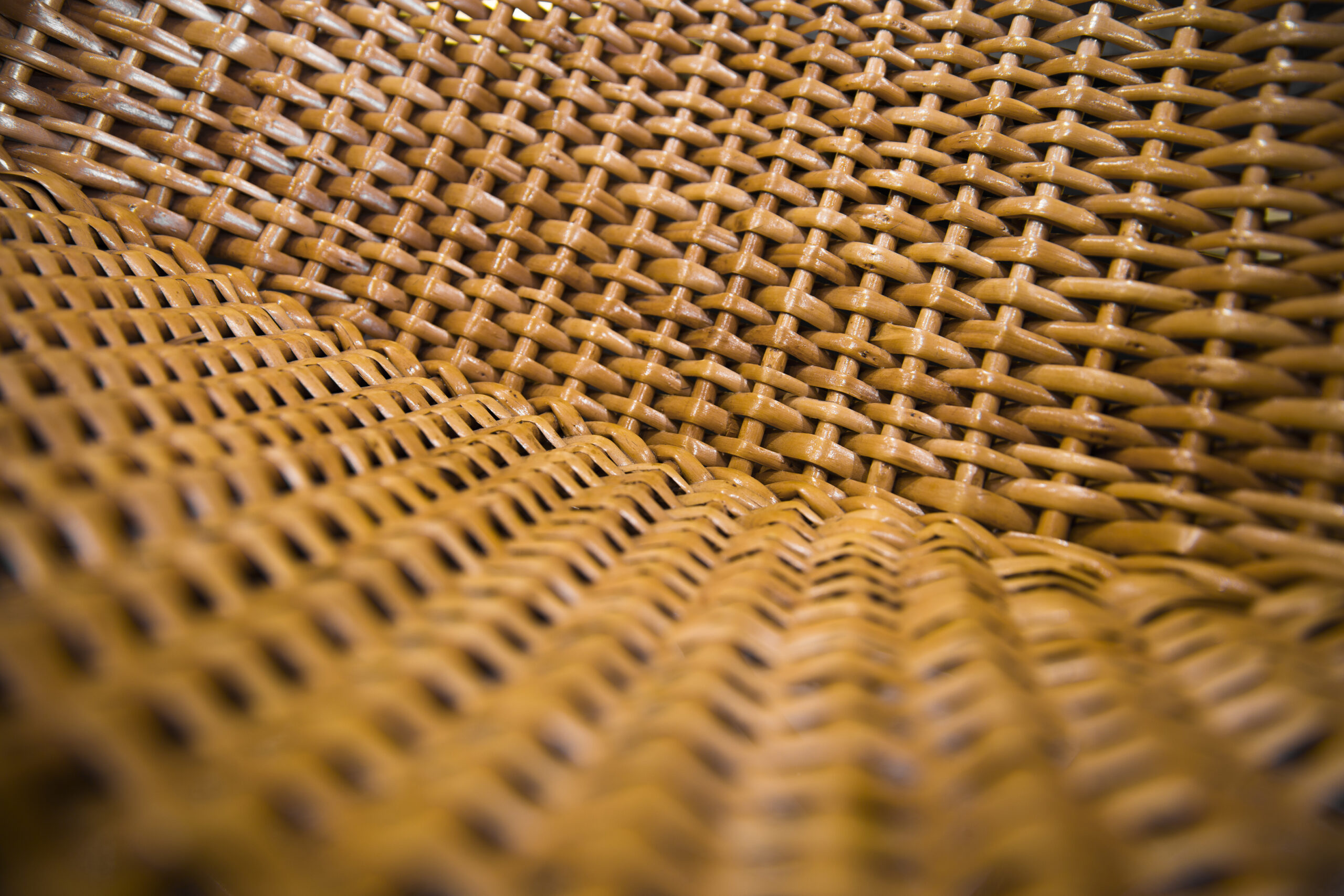
- Weave style: flat weave looks crisp and modern, round weave looks more traditional and chunky.
It’s also worth knowing that “wicker” has a long history in British homes. Victorian conservatories were full of willow and cane chairs, and that heritage is why woven furniture still feels at home in an English garden. Today’s synthetic versions borrow the same shapes, from tub chairs and high-backed armchairs to deep sofas, but swap the plant fibre for something that copes with drizzle. Many ranges also come in half-round or multi-tone weaves that mimic the colour variation of natural cane, which can look surprisingly convincing from a few steps away.
How to spot good quality weave
Whatever it’s called, the quality of the weave decides how long rattan and wicker furniture will last outdoors. A few things to check in the photos and customer reviews:
- Tight, even weave. Gaps and loose strands catch on clothes and unravel over time.
- Neat ends. Strands should be tucked and fixed underneath, not stapled on show.
- Thicker strands. Thicker PE rattan feels more substantial and is less likely to snap.
- Solid joins. Look for welded frame joints rather than lots of bolts through the weave.
- Weight limits. Good sets quote a weight per seat, which suggests the frame has been properly specified.
Expect to pay from around £400 for a decent synthetic rattan sofa set and well over £1,000 for large aluminium-framed corner sets with thick cushions. Natural cane conservatory suites can cost as much again, because so much of the work is done by hand.

Club Rattan Isobella 9-Seater Corner Sofa Set, Grey
Right-hand corner sofa in large grey weave with a generous footprint.
Check price on Amazon
Outsunny 8-Piece Aluminium Rattan Corner Sofa Set
Aluminium frame, wide deep seats and a glass-top table, delivered assembled.
Check price on Amazon


Which should you choose?
For the garden: synthetic rattan
If the furniture is going on a patio, decking or lawn, synthetic rattan is the sensible choice. It can stay outside all year with a fitted cover, needs little more than a wash with warm soapy water and copes with sun, rain and frost. Browse our rattan corner sofa sets or more compact rattan sofa sets to see the range of weaves and colours. Our grey rattan guide helps if you’re deciding on colour.
For indoors: natural cane or rattan
For a conservatory, garden room or sunny living room, natural cane brings real warmth and character. It’s lighter to move and has a more relaxed, vintage feel. Have a look at our conservatory furniture and our ideas for rattan conservatory furniture. Keep it out of direct, all-day sun behind glass, as it can dry out and fade.
The honest downside of synthetic rattan is that it never quite has the soft, organic feel of the natural material, and cheaper sets can look a little plasticky up close. The honest downside of natural rattan is that it simply isn’t outdoor furniture in a British climate.
Caring for rattan and wicker furniture
Synthetic rattan needs a brush down to remove leaves and dust, a wash a few times a year and a cover over winter. Our rattan cleaning guide walks through it step by step. Store cushions somewhere dry: a lined garden storage box works well.
Natural rattan and cane prefer a dry cloth or a soft brush and the occasional wipe with a barely damp cloth. Don’t soak it, and let it dry fully if it does get wet. A light coat of furniture wax or lacquer every couple of years keeps it supple.
Rattan and wicker FAQs
Can wicker furniture stay outside in winter?
Synthetic wicker can, ideally with a fitted cover and the cushions stored indoors. Natural wicker made from willow, reed or cane should come inside for winter.
Which lasts longer, rattan or wicker?
It depends on the material, not the name. Outdoors, a good PE synthetic rattan on an aluminium frame will usually outlast natural rattan or willow wicker by many years.
Is synthetic rattan eco-friendly?
It’s a plastic, so it isn’t the greenest material. On the plus side, a well-made set can last many years, which is better than replacing cheap furniture every couple of seasons.
How can I tell if furniture is real rattan?
Real rattan has natural variations in colour, small nodes along the stems and a slightly matte, fibrous feel. Synthetic rattan is uniform in colour and smoother to the touch.