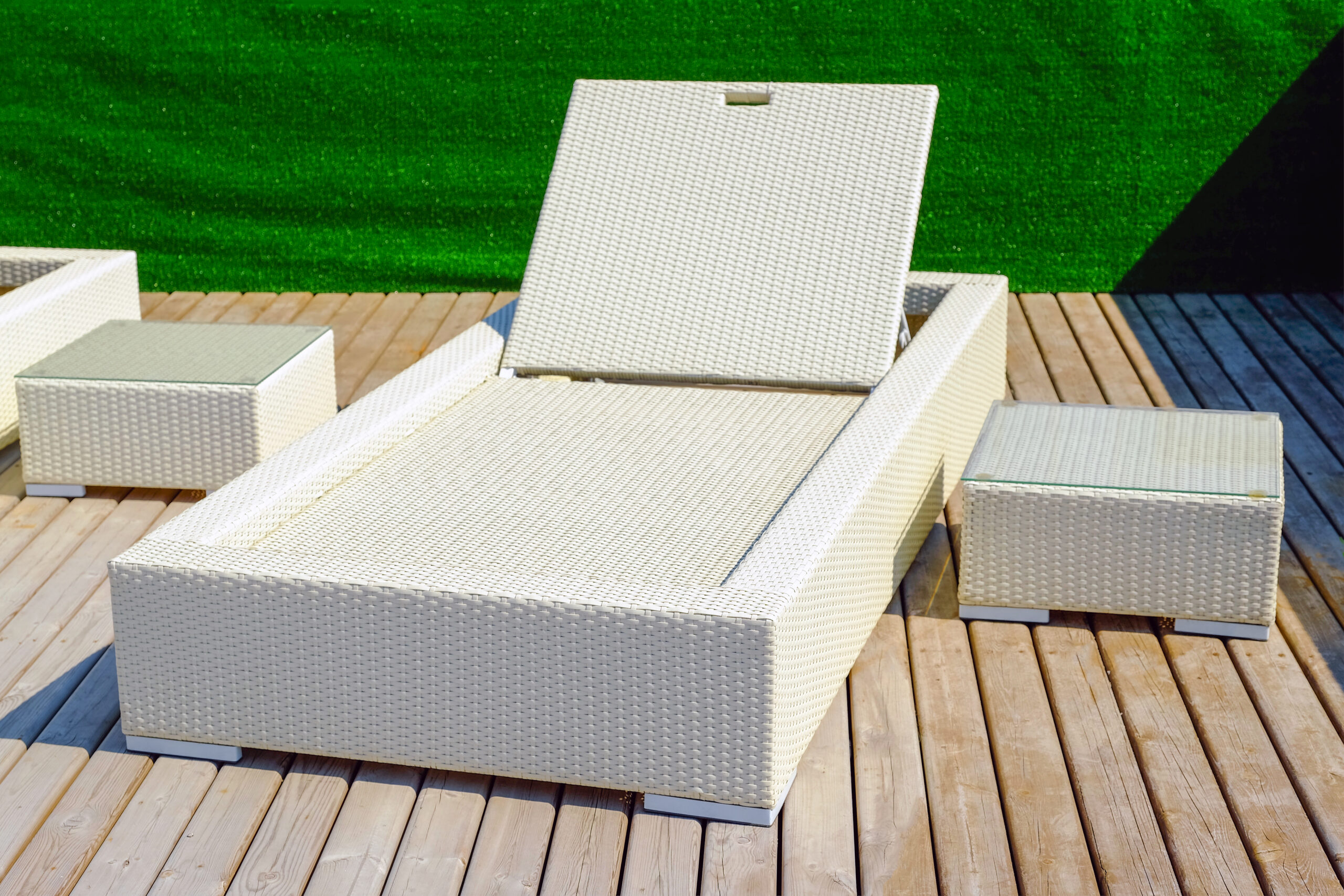
A rattan sun lounger is one of those buys you appreciate most on the first properly warm Saturday of the year. You drag it into the sun, tip the back down, and suddenly the garden feels like somewhere you’ve gone rather than somewhere you live. It’s also a buy worth thinking about now, while the garden is quiet and there’s time to measure up, compare and plan for next spring.
Loungers look simple, but the gap between a good one and a disappointing one is surprisingly wide. Recline mechanisms, frame materials and cushion thickness all make a real difference. This guide explains what to look for, which style suits your space, and how to keep it looking good for years. Our hand-picked selection sits partway down the page.
Why choose a rattan sun lounger?
- All-weather. PE rattan on an aluminium frame copes well with British sun and rain.
- Comfortable. The woven base has a little give, and a decent cushion makes it feel almost like a bed.
- Good-looking. Rattan sits nicely alongside sofa and dining sets, so your garden feels joined up.
- Low maintenance. A brush and a wash with soapy water is usually all it needs.
The honest downsides? Rattan garden loungers are bulkier and heavier than folding metal or textilene ones, and most don’t fold flat. If you need something to stash in a small shed after each use, a lightweight folding lounger may be more practical.
Types of rattan lounger
| Type | What you get | Best for |
|---|---|---|
| Single lounger | One lounger, usually with an adjustable back | Small patios, balconies with space to spare, solo sunbathers |
| Set of 2 with side table | Two matching loungers and a small table between them | Couples, poolside or a lawn with room to spread out |
| Double lounger | One wide bed for two, sometimes with a canopy | Lounging together, a more day-bed feel |
| Recliner lounger | A chair-height seat that tilts back with a leg rest | People who find low loungers hard to get out of |
A rattan sun lounger set of 2 is the most popular choice in the UK, and it usually works out better value than buying two singles. The side table is genuinely useful for drinks, books and sun cream. If you want something wider and more sheltered, a double lounger starts to cross over with a day bed, and our rattan day bed guide covers that side of things. If getting up from a low lounger is a struggle, a reclining garden chair gives you similar comfort at a friendlier height.
What to look for in a rattan sun lounger
Frame
Powder-coated aluminium is the one to aim for. It won’t rust, it’s light enough to move to follow the sun, and it suits a lounger that stays out for months. Steel frames are cheaper and feel solid but are heavier and can rust if the coating chips. Check the maximum user weight in the product details, and choose one rated comfortably above whoever will use it.
Recline positions
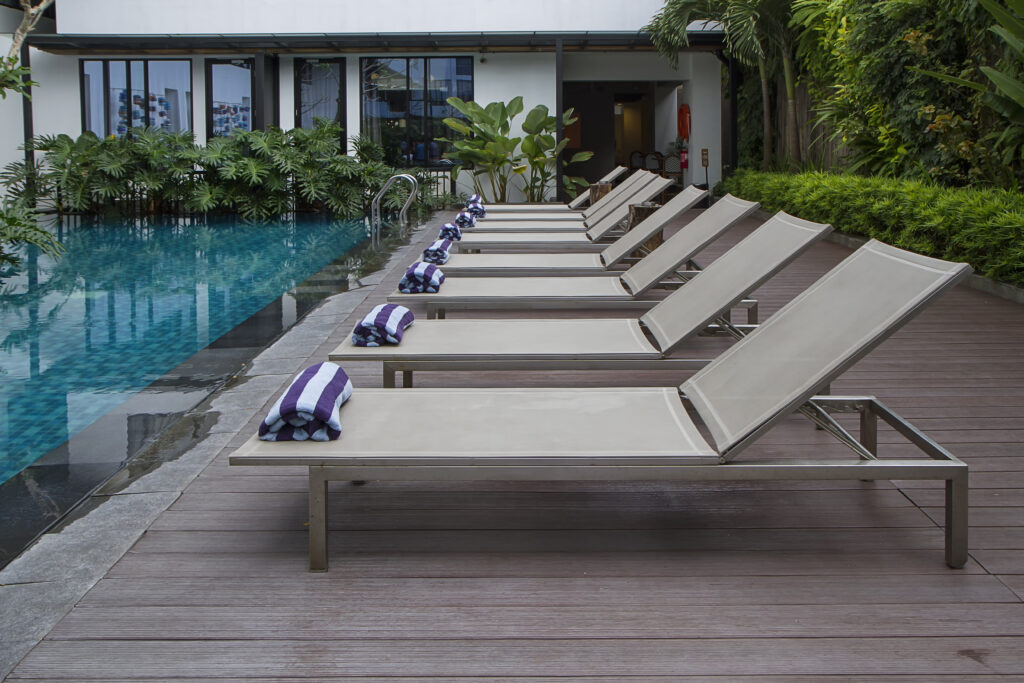
Most loungers have four to seven backrest positions, from nearly upright for reading to flat for sunbathing. A simple ratchet or lever is reliable and easy to use. Some also have an adjustable foot section, which helps if you like your knees slightly bent.
Wheels
Wheels at the head end make it far easier to move a lounger across a patio or lawn. On heavier models they’re almost essential.
Cushions
Look for a full-length cushion at least 5 to 8cm thick, with a removable, washable cover and quick-dry foam. Thinner pads are fine for a quick sunbathe but less comfortable for a long afternoon. Showerproof isn’t waterproof, so plan on bringing cushions inside overnight. Tired pads can be swapped for new garden cushions without replacing the whole lounger.
Assembly
Some loungers arrive fully assembled, which is handy if you’d rather not build anything. Others need legs or wheels fitting. Check the box sizes if you’ve got a narrow side gate.


Grey, brown or black?
A grey rattan sun lounger is the most common choice, and for good reason. It looks clean and modern next to stone, porcelain or composite decking, and grey cushions hide dust well. Brown and mixed natural tones feel warmer and more traditional, especially beside timber or in a cottage garden. Black looks smart and sharp, though it does get hot in strong sun, so you may want a towel on it in July.
If you’re matching loungers to an existing set, hold a photo of it up against the product images in good daylight. Our grey rattan furniture guide goes into how the different shades look and age outside.
Where to put your loungers
Think about where the sun falls in the afternoon, when most people lounge. A south or west-facing spot is ideal, with a wall, hedge or fence for shelter from the breeze. Allow roughly 2m by 80cm for each lounger, plus space to walk around it and swing the backrest down. A pair side by side with a table between them needs about 2m by 2m.
For shade on hotter days, a cantilever garden parasol with a heavy base is easy to swing over loungers without getting in the way. Firm, level ground matters too. Soft lawns can let legs sink, so consider placing loungers on paving, decking or gravel.
Price and the best time to buy
Good rattan loungers run from around £160 for a single steel-framed model to around £400 for a well-made aluminium set of 2 with a side table. Spending a bit more usually gets you a lighter aluminium frame, thicker cushions and a tighter, more even weave.
Prices often drop at the end of the season and in off-season sales, so autumn and winter can be a smart time to buy for next summer. Our guide to when rattan garden furniture goes on sale explains the timing. Read customer reviews for comments on the recline mechanism and how the cushions hold up, as these tell you more than the photos do.
Looking after rattan loungers
Brush off leaves and dust, then wash with warm soapy water a few times a year and rinse with clean water. Sun cream can leave marks on the weave, so wipe it off sooner rather than later. Our rattan cleaning guide has the full step-by-step routine.
Over winter, store cushions somewhere dry and use a breathable, fitted cover, or stand loungers on their end in a garage if you have room. Our garden furniture covers guide explains how to choose one, or browse protective covers directly.
Sun lounger FAQs
Can rattan loungers stay outside all year?
PE rattan on an aluminium frame can, with cushions brought in and a breathable cover over the winter. Steel-framed loungers last longer if stored in a shed or garage.
Are rattan loungers comfortable without cushions?
They’re fine for a short sit, as the weave has some give, but a cushion makes a big difference for longer spells.
Is a set of 2 better than two singles?
Usually, yes. A set tends to be better value, matches perfectly and often includes a side table.
Do rattan loungers fold?
Most don’t fold flat, though the backrest lowers. If storage is tight, check the folded or stored dimensions before you buy.
Ready to plan for sunnier days? Browse our hand-picked rattan sun loungers to compare singles, sets of 2 and double loungers side by side.