Sometimes you don’t need a whole new set. You need two comfortable seats for morning coffee, a few extra places round the dining table at Christmas, or a single armchair for the sunny corner of the patio. That’s where rattan garden furniture chairs come in. They’re light, weatherproof and easy to mix with what you already have, and a good pair can make a tired outdoor space feel finished.
The range is huge, though, from stackable dining chairs to deep-cushioned armchairs and recliners. If you’re wondering how to choose rattan garden chairs that are comfortable and still look good after a few British winters, this guide covers the materials, styles and features that really matter.
What is rattan?
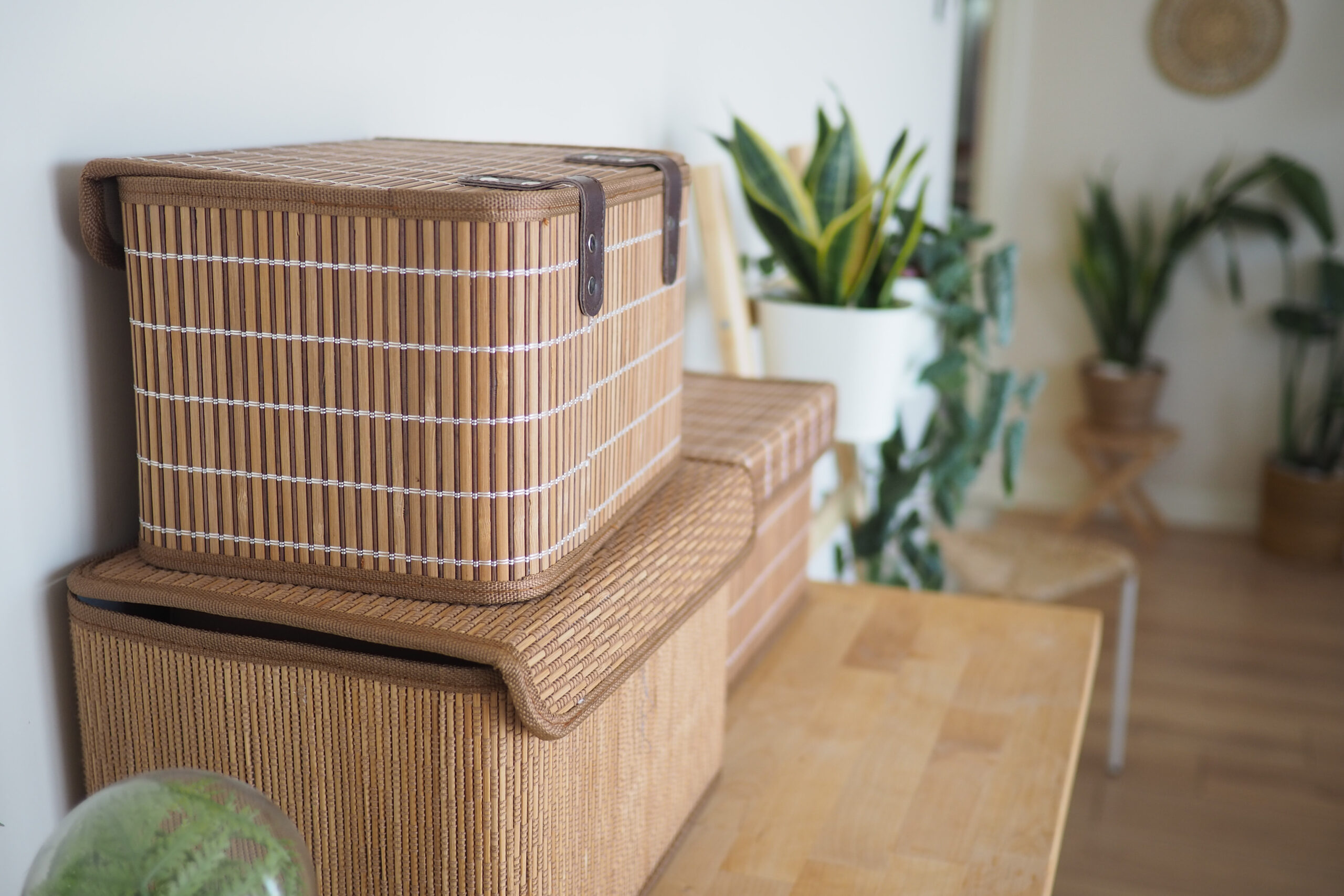
Natural rattan is a climbing palm that grows in South East Asia. Its tough, flexible stems are split and woven into furniture, which is where the classic cane look comes from. It’s beautiful, but natural rattan doesn’t like rain or strong sun, so it’s best kept indoors or in a conservatory.
Most rattan garden furniture today is made from PE rattan (polyethylene) woven over a metal frame. It looks like the real thing but is weather resistant, UV-stable and needs very little maintenance. When people talk about rattan chairs for the garden, this is almost always what they mean. If you love the warmth of natural rattan, our conservatory furniture ideas show where it works best.
Types of rattan garden furniture chairs
Chairs fall into a few broad groups. Knowing which you need narrows the choice quickly.
| Chair type | What it’s good for | Things to check |
|---|---|---|
| Rattan armchair | Lounging, reading, a pair on the patio | Seat depth and cushion thickness |
| Rattan dining chairs | Eating outside at a table | Seat height to suit your table |
| Stacking chairs | Extra seats that store away easily | How many stack safely |
| Rocking chairs | A relaxed spot on a porch or decking | Needs a flat, firm surface |
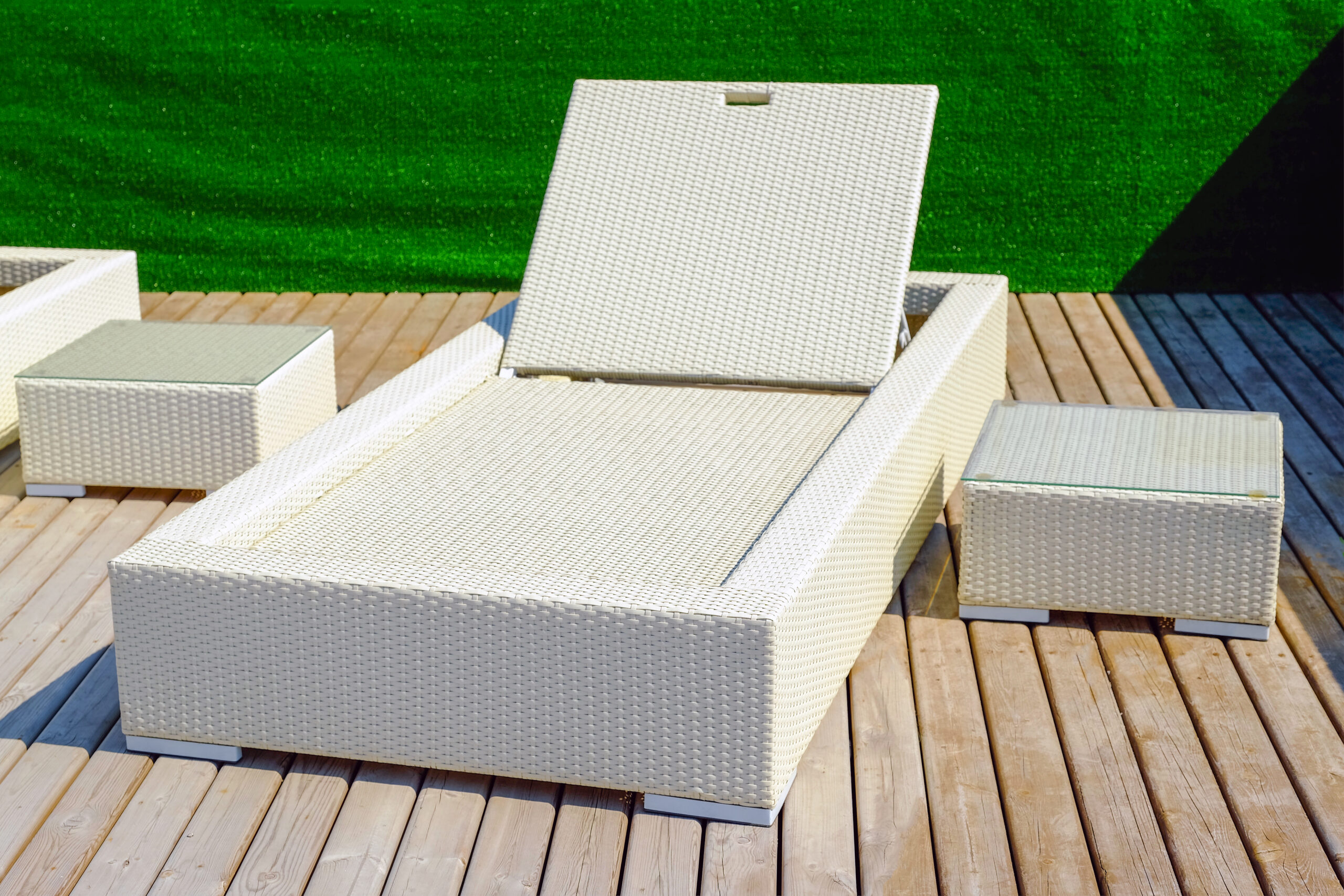
| Reclining chairs | Feet-up comfort without a lounger | Space behind when reclined |
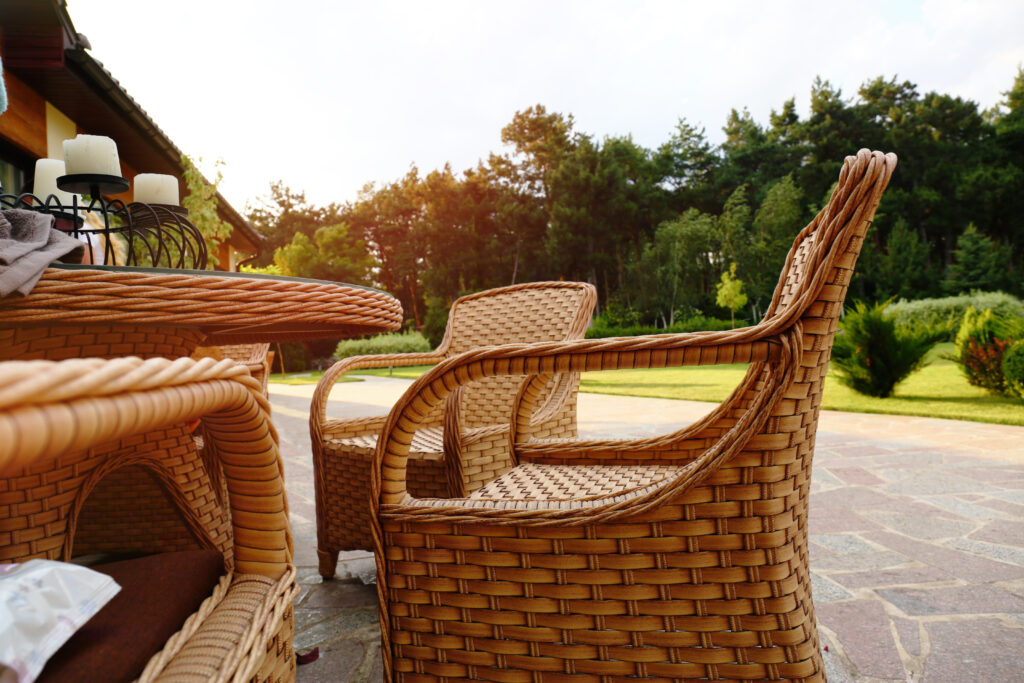
A rattan armchair usually has a deeper seat, wider arms and thicker cushions, so it feels more like a sofa. Rattan dining chairs sit more upright and taller, which makes eating easier. For a closer look at chairs that tilt back, see our guide to reclining rattan garden chairs, and if you want a hanging seat, the egg chair guide is the one to read.
How to choose rattan garden chairs
Comfort and size
Comfort comes down to seat depth, back height and cushions. Higher backs support your shoulders, and a slight tilt feels far more relaxed than a bolt-upright seat. Check the dimensions in the product details and compare them with a chair you like indoors. For dining, a seat height of around 45cm suits most standard outdoor tables.
Frame material
A powder-coated aluminium frame is the best choice for chairs that live outside. It’s light, strong and won’t rust. Steel frames are cheaper and feel sturdy, but they’re heavier and can rust if the coating is scratched. Some chairs add acacia wood arms or legs, which look warm and stylish but need an occasional oil to stay looking their best.
Weave quality
A tight, even weave with no loose ends is a good sign of quality. Flat weave feels smooth and contemporary; round weave has a more traditional, chunky feel. Rope-weave chairs are a popular alternative with a softer, modern look, though rope can take longer to dry after rain.
Cushions
Thicker cushions of 8cm or more feel far more comfortable than thin pads, especially on armchairs. Removable, washable covers and quick-dry foam make life much easier. Even weather resistant cushions are best brought in overnight, and replacement garden cushions are an easy way to refresh older chairs.


Colour and style
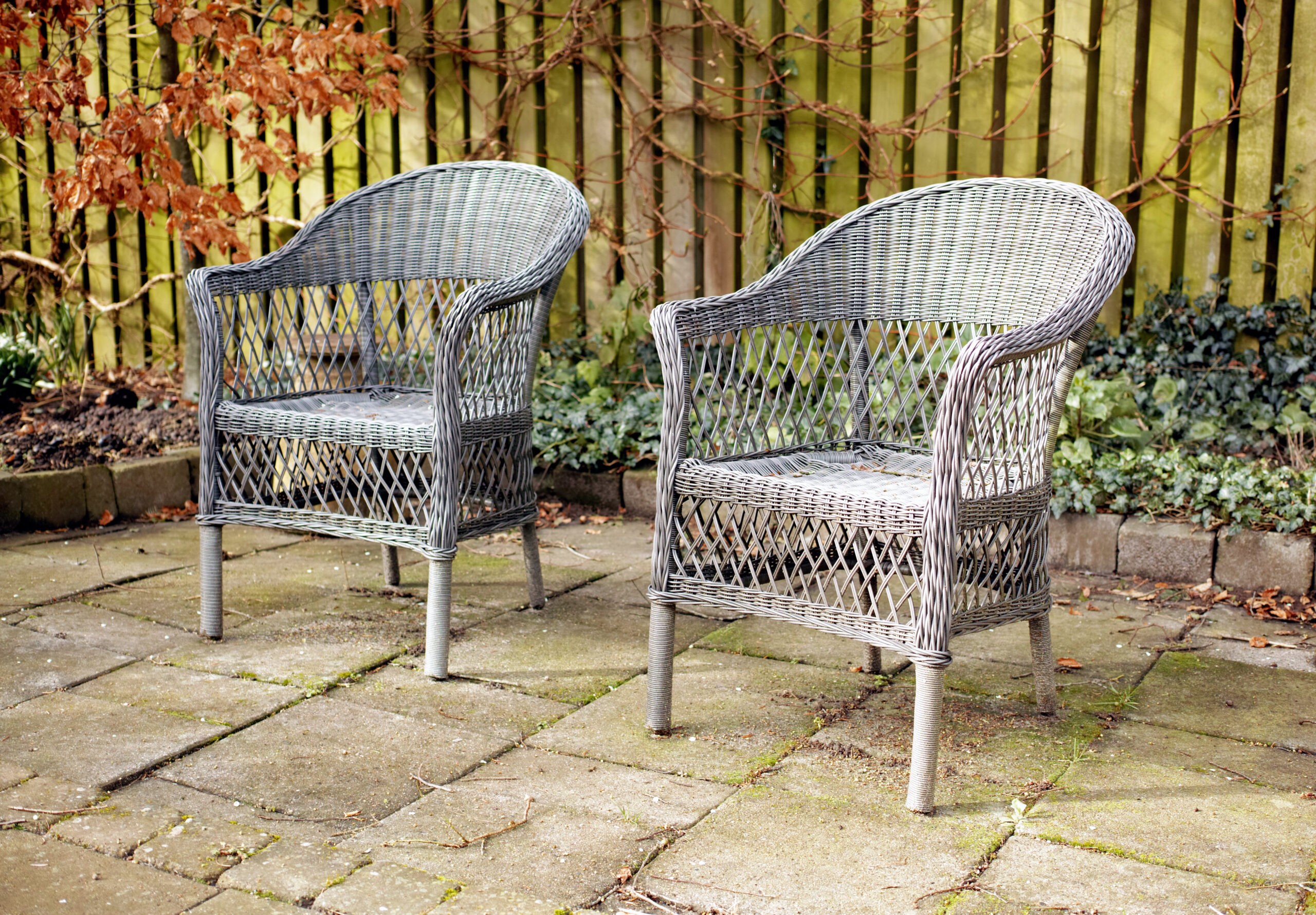
Colour has a big effect on how rattan furniture sits in a garden. Grey rattan is the most popular choice in the UK. It feels clean and modern next to stone or porcelain paving and pairs easily with grey cushions. Brown and natural tones feel warmer and more traditional, especially in cottage gardens or next to timber decking. Black looks smart and hides dirt well, but it warms up in direct sun.
Light colours show dust and green algae a little sooner in shady spots, so they need more regular cleaning. If you’re torn between shades, our grey rattan garden furniture guide compares how each colour looks and ages outdoors.
Mixing chairs with tables and sets
One of the best things about buying chairs on their own is the freedom to mix and match. A pair of armchairs with a small coffee table makes a relaxed seating corner that takes up far less space than a corner sofa set. Two or four dining chairs around a glass or slatted table give you a simple outdoor dining spot. Our rattan dining set guide explains how to size the table and chairs together.
If you already own a sofa set or garden furniture set, extra chairs in the same colour give you more seats for parties without buying a whole new set. Matching tones matter more than matching weave, so take a photo of your existing furniture when you shop. For balconies and small gardens, two compact chairs and a tiny table are often all you need, as our bistro set guide shows. Check balcony weight limits and any lease rules before you buy.
Prices for good outdoor rattan chairs run from around £80 for a pair of simple stacking chairs to around £230 or more for a single well-made armchair with a thick cushion. The honest downside of cheaper chairs is usually the cushion and the frame coating rather than the weave itself.
Can you leave rattan garden furniture outside?
PE rattan chairs on an aluminium frame can stay outside all year, but a little care keeps them looking good for longer. Bring the cushions inside when it rains and over winter. Use a breathable, fitted cover through the wettest months, or stack chairs in a shed or garage if you have room. Our garden furniture covers guide explains how to choose one.
Steel-framed chairs and anything made from natural rattan are better stored indoors once autumn sets in. Lift chairs off lawns onto paving or decking so the feet don’t sit in wet grass, which can damage the frame over time.
How to clean rattan furniture
Maintenance is easy. Brush off leaves and dust with a soft brush, then wash with warm soapy water and rinse. Let the chairs dry fully in the sun before putting cushions back on. A couple of thorough cleans a year, plus a quick wipe after a long spell of rain, is plenty. Our rattan cleaning guide has the full step-by-step routine, including how to deal with green algae.
Rattan garden chair FAQs
Are rattan chairs comfortable?
Yes, if they have a good back angle and thick cushions. Armchairs are usually more comfortable for lounging, while dining chairs are designed for sitting upright at a table.
Can I use rattan dining chairs indoors?
Absolutely. PE rattan chairs work well in a kitchen, garden room or conservatory, and they’re easy to wipe clean.
Are stacking rattan chairs worth it?
They’re ideal if storage space is tight or you only need extra seats now and then. They tend to have thinner cushions, so they’re better for dining than lounging.
Do rattan chairs fade in the sun?
UV-stable PE rattan resists fading well, but cushions fade sooner. A parasol on hot days and storing cushions out of the sun will help.
Ready to find your perfect seat? Browse our rattan armchairs and rattan garden furniture chairs for dining to compare styles, colours and cushions side by side.