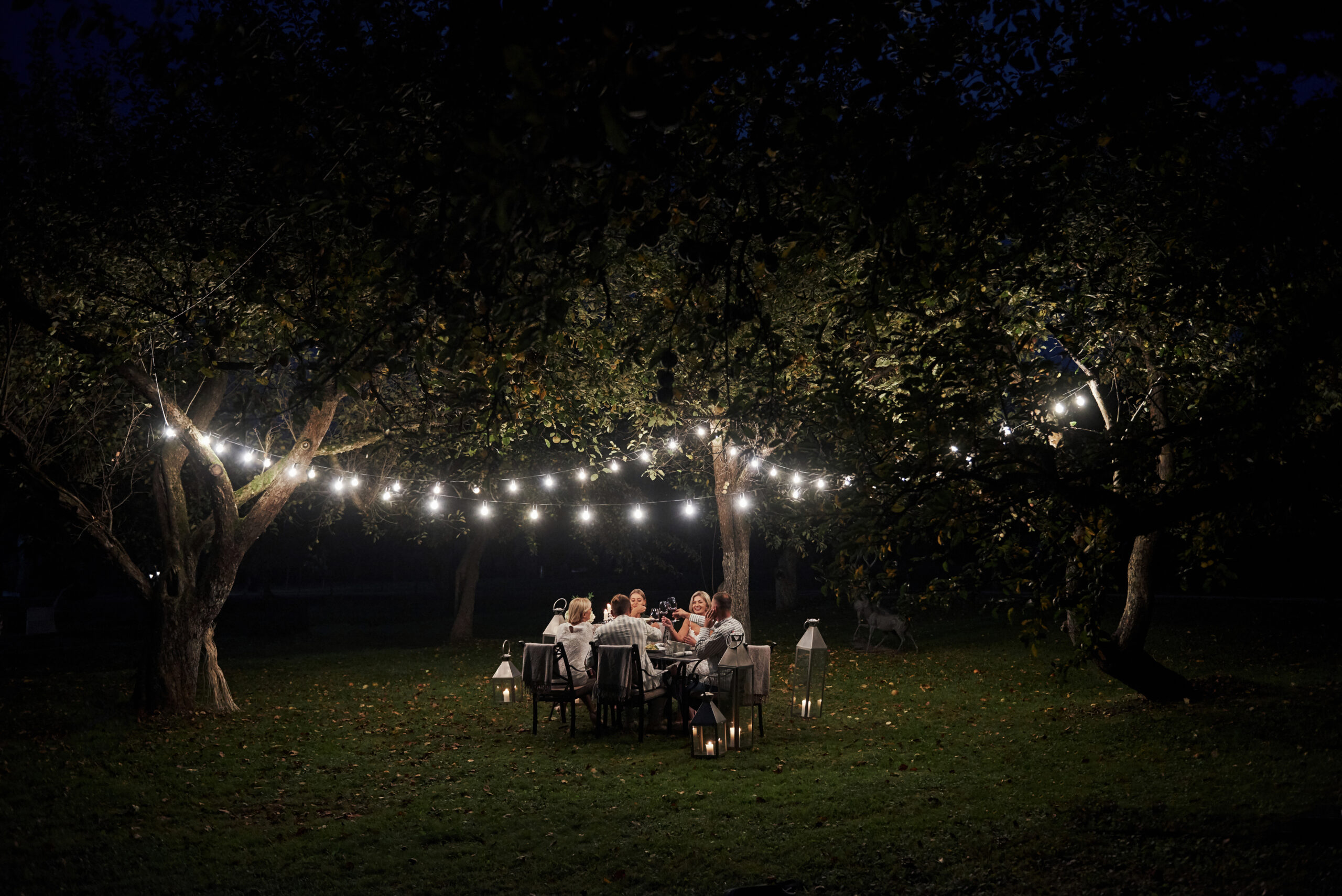
Good garden lighting ideas don’t need a big budget or an electrician on speed dial. A string of festoon lights over the patio, a few lanterns on the table and a soft glow under the trees can turn a dark winter garden into somewhere you actually want to sit, even when it’s dark by half past four.
The trick is to think about light the way you would indoors. You wouldn’t light your living room with one bright ceiling bulb, and the same goes outside. Here’s how to light your seating area so it feels warm, safe and welcoming, with ideas for every size of garden.
Start with layers, not one big light
Lighting designers talk about layering, and it’s the most useful idea in garden lighting design. Rather than one floodlight, you layer three types of light, each with its own job:
- Ambient light: the soft overall glow, usually from string lights or wall lights.
- Task light: brighter light where you need to see, such as steps, the barbecue or the dining table.
- Accent light: small fittings that highlight plants, trees or features like a water bowl or sculpture.
Mix all three at low levels and your outdoor space feels relaxed rather than lit like a car park. It also means you can switch layers on and off depending on whether you’re having dinner, a drink or just walking to the shed. Once you’ve got the basics in place, you can add to it over time.
Festoon and string lights over the patio
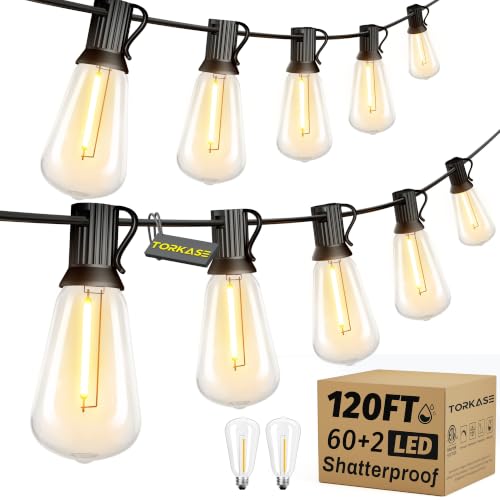
If you only do one thing, do this. Festoon lights strung above a seating area create an instant ceiling of warm light and make even a small patio feel like a room. They’re the most popular of all outdoor lighting ideas for good reason.
- Zigzag them between the house wall and a couple of fence posts or a pergola for a canopy effect.
- Keep the lights high, at least 2.2m, so nobody walks into the cable and the light spreads evenly.
- Use a support wire for long runs, so the cable isn’t taking all the strain in the wind.
- Choose shatterproof bulbs, especially if children play in the garden.
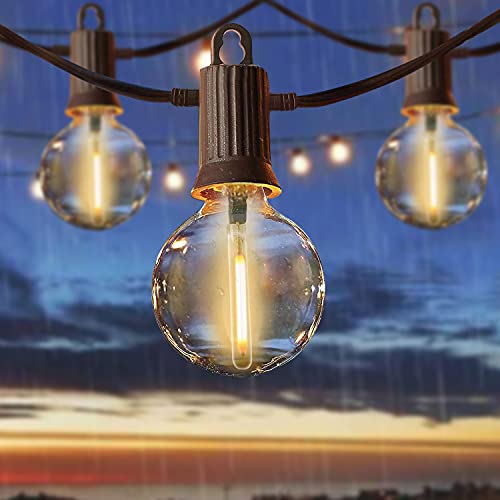
Mains-powered festoon lights give the brightest, most reliable light and suit regular winter use. Solar versions are easier to put up but can struggle on short, grey December days. For festoon lights in the garden that you’ll use most evenings, mains is usually the better choice and worth the extra effort. Whichever type you pick, match the bulb style to your garden: round globes suit a relaxed cottage style, while Edison-style filament bulbs feel more industrial.
Solar garden lights: easy, but know their limits
Solar garden lights are brilliant for pathways, borders and anywhere you can’t run a cable. No wiring, no running costs and they come on by themselves at dusk.
The honest downside is winter performance. Solar lights need a few hours of decent daylight to charge, and in a shady British garden in mid-winter they may only glow for an hour or two. Put the panels where they get the most sun, wipe them clean now and then, and treat solar lights as accent lighting rather than the main event between November and February.
- Solar spot lights pointed up into trees and shrubs.
- Stake lights lining a pathway to the seating area.
- Flickering flame lights in planters for a fire-like glow without the fire.


Wall lights and up-lighting
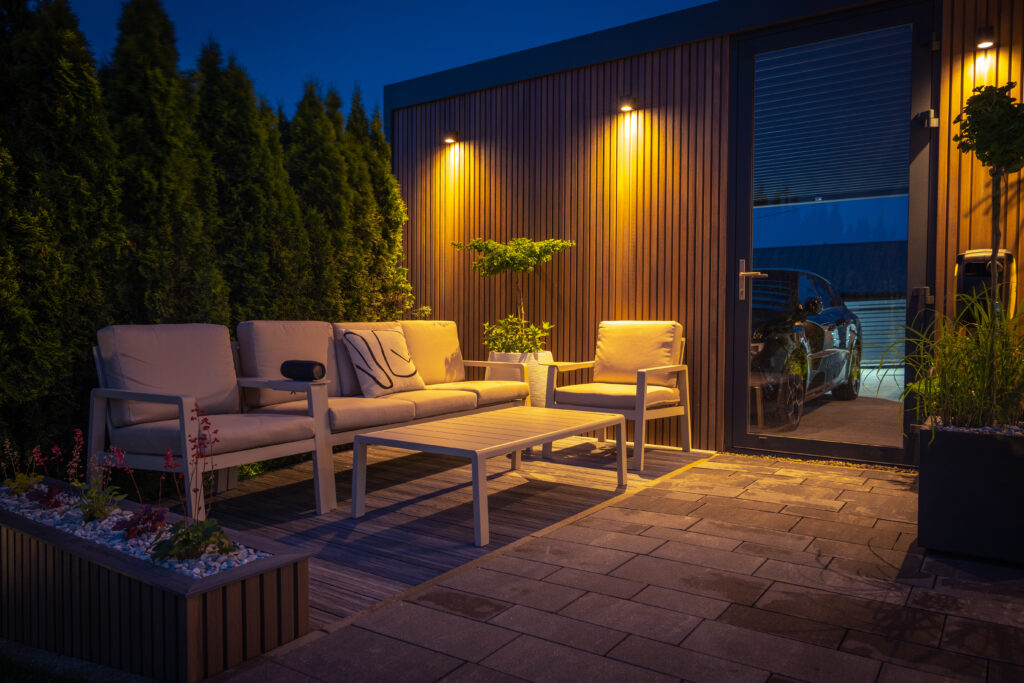
Outdoor wall lights near the back door give you practical light for visibility and security, and set the mood for the patio when they’re on a dimmer or a low setting. Choose ones that point down or up rather than straight out, so you don’t dazzle people sitting nearby.
Up-lighting trees is one of the most dramatic ways to add atmosphere. A single spike light at the base of a tree throws light up into the branches and creates beautiful shadows, even in winter when the branches are bare. Grasses, ferns and architectural plants look lovely lit from below too. Set the fitting at the bottom of the trunk and hide it among plants, so you see the effect rather than the bulb.
Lighting the seating area itself
Your rattan furniture is the heart of the garden after dark, so light it gently. There are plenty of options here, and most need no wiring at all.
- Lanterns and candles: clustered on a coffee table or along the edge of decking. LED candles are safer near cushions and throws.
- Table lamps: rechargeable outdoor table lamps bring the feel of interior lighting outside.
- Fairy lights: wrap them round a parasol pole (when the parasol is closed), a pergola post or through the weave of rattan planters.
- Under-seat or step lights: low LED strips under a built-in bench or along a step edge stop trips.
Pair your lights with a patio heater and some thick throws and the seating area works on all but the coldest nights. Our rattan corner sofa sets are designed to sit out all year, and our guide on whether rattan furniture can stay outside in winter explains how to care for them through the colder months.
Lighting a pergola, gazebo or covered area
A pergola or gazebo gives you the perfect frame for lights. Weave fairy lights or a festoon string along the beams, or hang a couple of outdoor pendant lanterns from the centre. Climbing plants growing over the top look magical with tiny lights threaded through them. Under a solid roof, an outdoor-rated ceiling light on a dimmer gives you enough light to eat by without killing the mood. Check that any fittings under cover are rated for damp conditions, and keep everything well away from heaters and candles. If you’re still choosing a shelter, our gazebos range has open-sided designs that are easy to light.
Warm white or cool white?
For a seating area, warm white almost always wins. It’s closer to candlelight, flatters people and plants, and feels cosy. Cool white looks crisp and modern but can feel harsh and clinical, so save it for security lights or a contemporary path if you like the look. Coloured lights are fun for a party, but a little goes a long way. Some smart bulbs let you switch between warm and cool, which is a handy option if you can’t decide, and they let you dim seating areas and paths separately.
Safety, power and practical tips
- Use lights rated for outdoor use, ideally IP44 or higher, and outdoor-rated extension leads only.
- Plug into a weatherproof outdoor socket with RCD protection. Any new hard-wired outdoor circuit in England and Wales should be done by a qualified electrician.
- Keep connectors off the ground and away from puddles.
- Fit a timer or smart plug so lights switch off at bedtime, which saves energy and keeps neighbours happy.
- Angle lights down or into the garden rather than towards windows next door, to avoid light pollution.
Prices start from around £15 for a set of solar lights and from around £30 for a good mains festoon set. You’ll find our picks in the garden lighting collection, and some of our rattan planters look lovely with lights tucked among the greenery.
Garden lighting ideas: FAQs
What is layering lighting in a garden?
It means combining soft overall light, brighter task light and small accent lights, rather than relying on one bright fitting. It makes a garden feel bigger and more relaxing.
Do solar garden lights work in winter?
They do, but with less daylight they charge less and glow for shorter periods. Put panels in full sun and use mains lights for your main seating area.
How high should festoon lights be?
Around 2.2m to 2.5m above the ground is a good height. That’s high enough to walk under comfortably and low enough to feel cosy.
How do you light a small garden?
If you’re looking for a simple plan, try festoon lights along one wall, a couple of lanterns on the table and solar spikes in pots. In a small space, fewer, softer lights look better than lots of bright ones.