A rattan egg chair is about the best spot going for curling up with a book or a cuppa. The rounded, cocoon shape wraps around you, the cushion swallows you up, and it gives the garden a proper statement piece. They’re not all the same, though. Some swing, some don’t, some seat two, and the difference between one that lasts and one that sags after a summer usually comes down to a handful of details. Here’s what to weigh up before you buy, plus the honest downsides nobody mentions on the product page.
Hanging or standing egg chair?
This is the first decision, and it shapes everything else, from where the chair can go to how much space you need.
Standing (with its own frame)
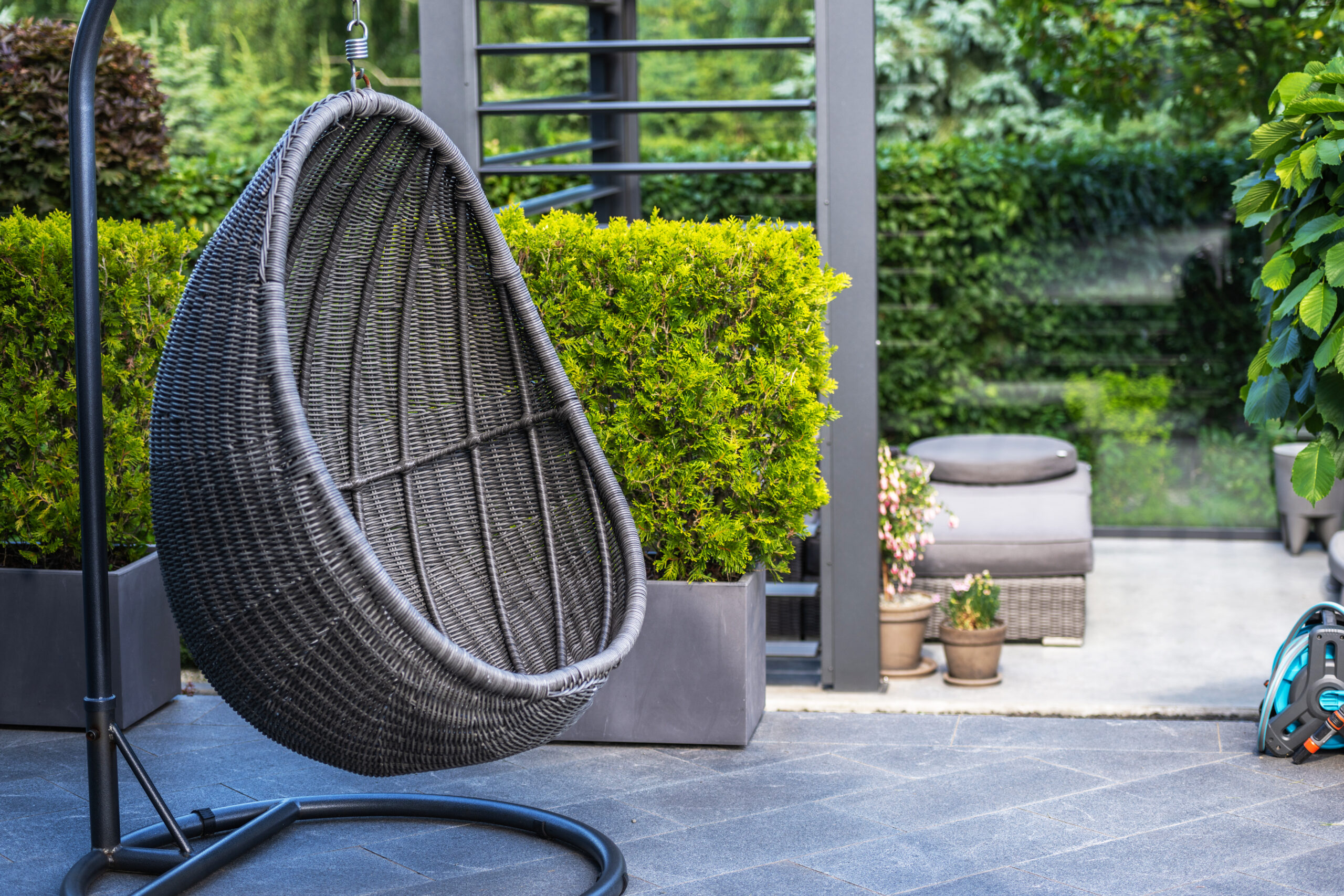
Most garden egg chairs hang from their own metal stand, so you get that gentle sway without drilling into anything. You can put one on the patio, the lawn or a decking area and move it when the sun moves. This is the most popular option by far, and the easiest to live with if you rent or simply don’t fancy fixing anything to the house.
The trade-off is the stand itself. It adds to the footprint, it’s another thing to clean and cover, and a cheap one can wobble on uneven ground.
Hanging (ceiling or beam mounted)
Without a stand, the chair hangs from a pergola beam, a sturdy veranda or a ceiling hook in a garden room. It looks sleek and frees up floor space. The catch is that you need a solid fixing rated for the weight of the chair plus whoever’s sitting in it, with a good margin on top. If you’re not sure the beam or joist can take it, ask a builder or joiner before you hang anything. A failed fixing isn’t a risk worth taking.
Fixed egg chairs
Some egg chairs sit on a pedestal or legs and don’t swing at all. They’re a smart choice if you love the shape but not the motion, or if the chair is going somewhere a swing would get in the way, like a compact balcony or beside a dining set.
| Type | Best for | Space needed | Watch out for |
|---|---|---|---|
| Standing with frame | Patios and lawns, renters, moving it around | The most, as the stand adds width | Wobble on uneven ground, a narrow base |
| Beam or ceiling hung | Pergolas, verandas, garden rooms | The least on the floor | Needs a fixing rated well above the total weight |
| Fixed on legs or pedestal | Balconies, tight corners, people who dislike swinging | Moderate | No sway, and less of the classic look |
Single or double egg chair?
A single egg chair is cosy for one adult, with room to tuck your legs up. A double egg chair fits two adults, or one adult and a child or two, and makes a lovely focal point at the end of the garden.
Doubles are wider and heavier, so check two things before you commit. First, the footprint of the stand, because it can be noticeably bigger than you’d guess from photos. Second, the weight limit, which should cover two people comfortably rather than only just. If the chair will mostly be used by one person who likes to sprawl, a generous single is often the better buy.
What to look for in a rattan egg chair
Two chairs can look identical in the listing photos and feel very different after a season outdoors. These are the details that matter most.
- Weight limit: singles are commonly rated somewhere around 120 to 150kg, but it varies, so always check the listing. Doubles should be rated higher.
- Stand: powder-coated steel or aluminium with a wide, stable base. Aluminium won’t rust; steel is heavier, which helps with stability, but scratches in the coating need touching up.
- Weave: UV-stable PE rattan in a tight, even weave. Cheaper PVC weaves tend to fade and turn brittle faster in strong sun.
- Basket frame: the frame inside the weave should be metal, not plastic, and the hanging point should be solid.
- Cushion: thick, with a removable, showerproof cover you can wash. A headrest pillow is a nice touch. Thin cushions flatten quickly, and you’ll notice.
- Chain and hook: a chain with a few adjustment points lets you set the seat height, and a swivel hook stops it twisting awkwardly.
- Foldability: some stands come apart or fold for winter storage, which helps if shed space is tight.

Outsunny Teardrop Rattan Egg Chair, Mixed Grey
A standing teardrop egg chair with a full-body padded cushion.
Check price on Amazon
VIXLON Double Egg Chair with Stand and Canopy
Room for two, with a canopy for shade and weather-resistant cushions.
Check price on Amazon
Pamapic Double Rattan Hanging Egg Chair
A double egg chair on a stand with UV-resistant cushions.
Check price on Amazon
Vienna Hanging Rattan Egg Chair, Grey
A classic grey weave egg chair on its own hanging stand.
Check price on Amazon
COSTWAY Oversized Wicker Egg Chair
A fixed, oversized egg-shaped chair if you love the shape but not the swing.
Check price on AmazonColours and styles
Grey is the most popular colour for an outdoor egg chair, because it sits happily with most patios and other furniture. Our guide to grey rattan garden furniture covers the different shades. Brown and natural tones feel warmer and more traditional, while black looks sharp against light paving or a white render wall. Cushion colours are easy to change later, so pick the weave colour you’ll be happy with for years and treat the cushion as the fun part. Replacement cushions are a cheap way to refresh the look.
Where to put your egg chair
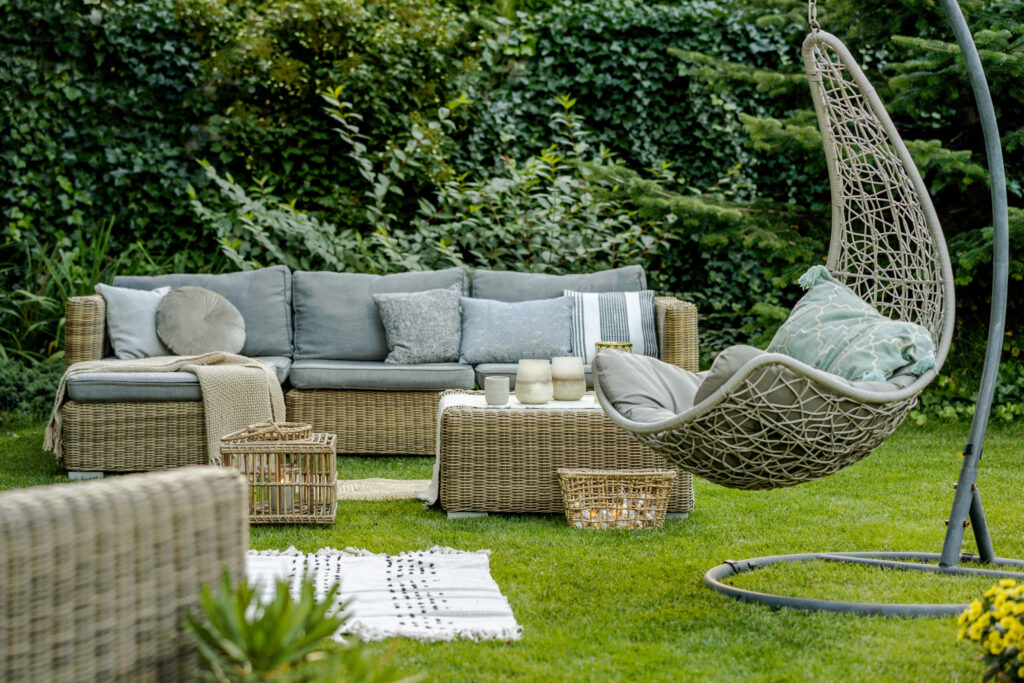
Egg chairs look best with a bit of space around them so the shape can shine. Try a sunny corner of the patio, under a tree for dappled shade, or beside a rattan corner sofa as an extra seat when friends come round. Allow around 1.2m x 1.2m for a single chair on its stand, and more for a double, plus room to swing without clipping a wall or plant pot.
A few practical pointers:
- Level ground matters. Paving or decking is easiest. On a lawn, the stand can sink or tilt after rain.
- Think about wind. In exposed gardens, a tall egg chair on a stand can catch the wind. Choose a heavy base, keep it sheltered, and take the cushion in when it’s blowy.
- Balconies need checking first. If you live in a flat, check your balcony’s weight limit and your lease or building rules before buying. A fixed or compact chair is often the safer bet, and our balcony and small garden guide has more ideas.
The honest downsides
We love egg chairs, but they’re not perfect. They take up more room than a normal garden chair, especially on a stand. They’re a one-person seat (or two at a squeeze), so they work as an extra rather than your main seating. The cushion needs bringing in more often than you might like in a British summer. And getting out of a deep egg chair isn’t the most graceful move, which is worth considering if anyone in the house has mobility issues. A fixed chair with a firmer cushion helps there.
Looking after it
Bring the cushion in at night and when rain’s forecast. Brush and wash the weave a few times a year, check the chain and bolts at the start of each season, and cover the chair or move it into a shed over winter. A fitted, breathable cover from our protective covers range keeps it looking fresh. Our rattan cleaning guide has the step-by-step details.
Rattan egg chair FAQs
Are rattan egg chairs comfortable?
Very, as long as the cushion is thick. The deep, enveloping shape supports your back and lets you tuck your legs up. A thin cushion is the main thing that spoils it, so it’s worth checking before you buy.
Can egg chairs stay outside all year?
The frame and PE weave can, but the cushion should come in. A cover over winter keeps the weave clean and stops the stand weathering, and it’s worth checking bolts and the chain each spring.
How much space do you need for a hanging egg chair?
Allow roughly 1.2m x 1.2m for a single on its stand, and more for a double. Leave a little extra clearance so it can swing without knocking into walls, pots or people.
Do they need assembling?
Usually just the stand, which typically takes 20 to 30 minutes with two people. The basket normally arrives ready-made.
Browse our garden egg chairs, or see the full rattan garden furniture guide if you’re planning a whole set.